

Thrust bearings are categorized into three main types based on how they accommodate axial loads:
Sliding (journal-style) thrust bearings-also known as thrust washers or thrust rings-support loads via a precision-ground, flat sliding surface. This surface is typically supported by a film of lubricating oil and often features machined grooves to distribute the lubricant. They are compact, impact-resistant, and well-suited for heavy loads at relatively low speeds.
Ball thrust bearings consist of a ring of balls positioned between two grooved thrust washers. They can handle moderate axial loads at high speeds with low friction; however, they have almost no capacity for radial loads and are highly sensitive to misalignment.
Roller thrust bearings-which include cylindrical, tapered, or spherical roller variants-replace balls with rollers, increasing the contact area to enhance load-carrying capacity. Tapered roller thrust bearings, for instance, can accommodate significant combined radial and axial loads in high-capacity transmission systems.
Are thrust bearings axial or radial?
As the name implies, thrust bearings are axial. They are designed to support axial loads-forces acting parallel to the shaft's centerline-rather than radial loads, which act perpendicular to the shaft. This is a critical distinction in bearing selection: radial bearings support transverse loads and the weight of the shaft itself, whereas axial thrust bearings counteract the thrust that would otherwise cause the shaft to shift along its longitudinal axis.
In industrial bearing applications, the distinction between axial and radial support is vital. Axial thrust bearings are specifically engineered to address the unique demands of axial loading, ensuring that rotating components maintain precise axial positioning and preventing unwanted displacement under operational stress. This specialized design is essential in high-reliability environments, where improper load management could lead to premature wear or catastrophic failure. By selecting the appropriate bearing type for each load direction, designers can ensure optimal performance and durability for the entire system.
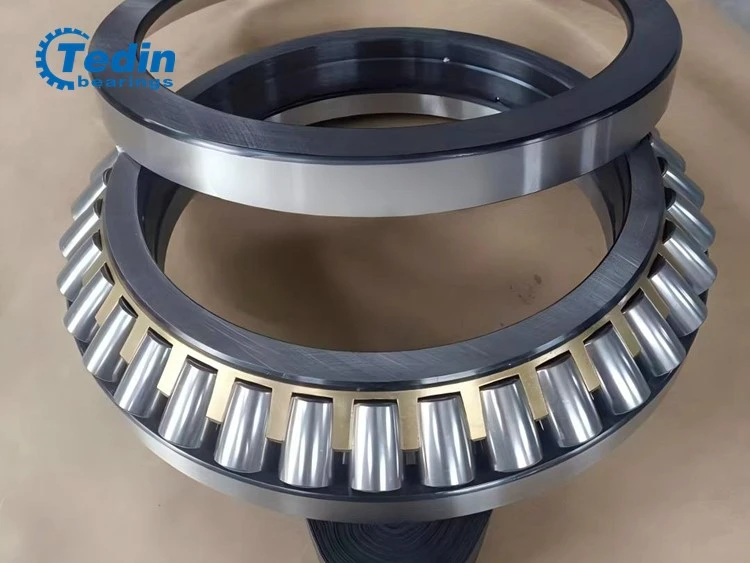
The direction of the load determines the contact geometry, which in turn dictates where the material must possess the greatest strength, as well as how the lubricant is delivered and retained. A standard thrust washer features a flat, annular contact surface perpendicular to the shaft, allowing axial forces to be distributed across the entire ring; a radial sleeve bearing, by contrast, consists of a cylindrical bore, which distributes lateral loads around its circumference. If either type is subjected to a load for which it was not designed, the contact area effectively shrinks and the pressure rises, ultimately leading to surface failure.
In practical machinery, these two types of loads rarely act in isolation; consequently, most industrial bearing applications combine thrust-bearing elements with radial support. The engineer's task is to ensure that each load is borne by the component designed for it-axial thrust is directed to the thrust surface, while radial loads are directed to the journal-thereby preventing any surface from carrying a load for which it was not intended. When a thrust bearing is forced to endure significant radial loads (or vice versa), this misalignment in load distribution is frequently the root cause of premature wear.